
How key minerals are used
A mineral’s value to industry comes from what it can do—and the form in which it reaches the user. Copper, fluorspar and tungsten illustrate three very different paths from material to application.
Copper: connecting electrical systems
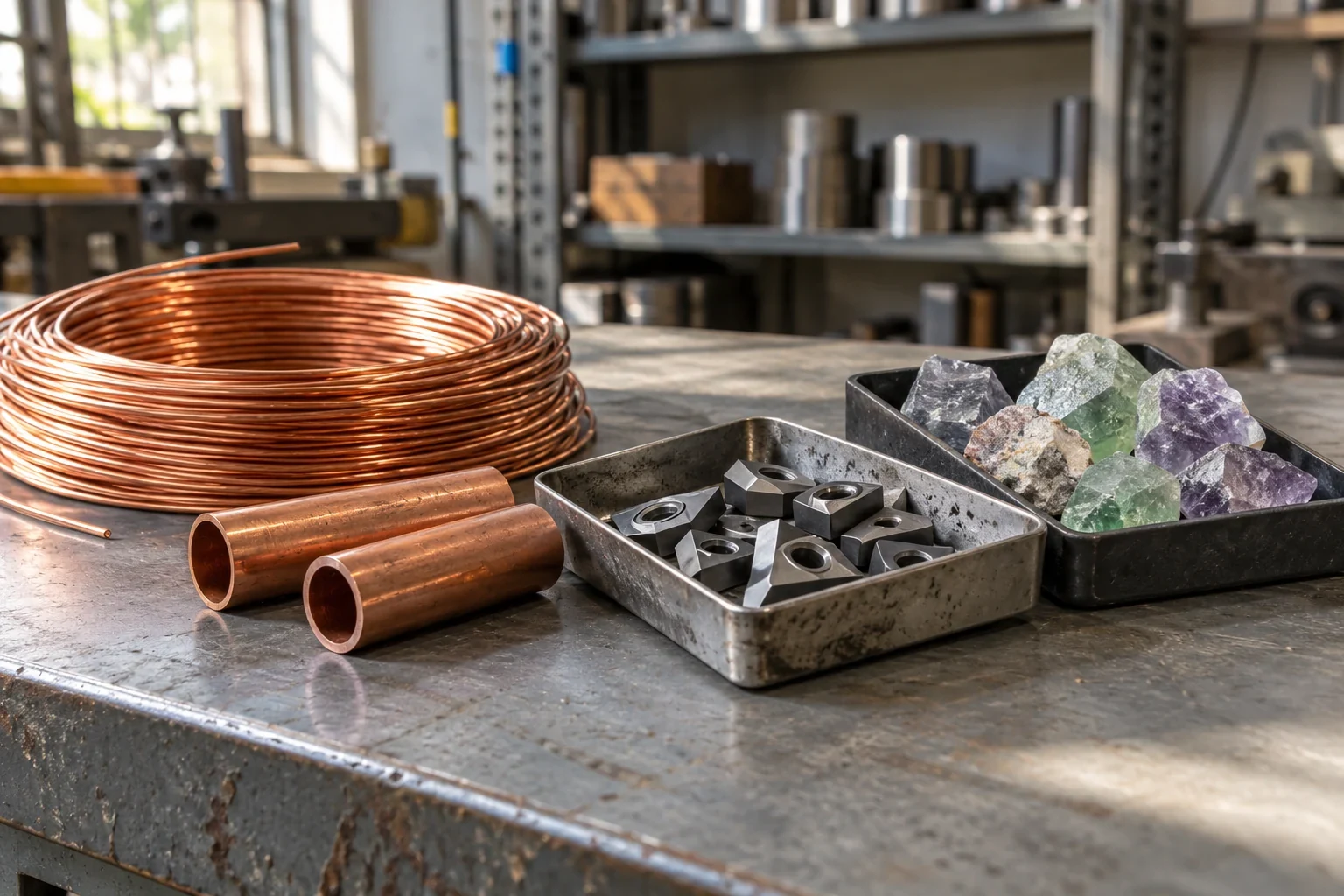
Copper’s electrical and thermal conductivity, combined with its ability to be formed into useful shapes, supports applications in wiring, power equipment, electronics and construction. Copper supply also includes recycled material. For a commercial enquiry, it helps to distinguish a mineral concentrate, refined metal and a finished component: they occupy different stages of the supply chain. Product form and supporting quality information make a discussion more useful than the metal’s name alone.[1]
Fluorspar: a less visible industrial input
Fluorspar contributes directly or indirectly to products including steel, aluminium, refrigerants and insulating foams. Its role may be less visible in a finished product than copper wire, but it connects mineral supply with metallurgical and chemical manufacturing. The practical implication for an enquiry is to begin with the intended application, required chemistry and agreed product form. A broad industrial use should not be treated as confirmation that any particular material is suitable.[2]
Tungsten: working where wear matters
A major use of tungsten is in cemented carbides: hard, wear-resistant materials used in cutting tools and industrial equipment. Tungsten also has electrical, heating and alloy applications. A mineral sample and a finished carbide tool are very different products, with processing stages between them. Discussions therefore benefit from naming the required material or intermediate product and its specifications. On this website, tungsten remains a material of interest for future opportunities, rather than a claim of current supply.[3]